Does artificial turf get hot?
Yes, in direct sun. Here is how much, how it compares to your patio, and what genuinely helps.
Yes, in direct sun. Here is how much, how it compares to your patio, and what genuinely helps.
The honest answer is yes, artificial turf gets warmer than natural grass in direct sunlight. Anyone telling you otherwise is selling.
Living grass cools itself through evapotranspiration — it moves water and that keeps it near air temperature. Turf has no such mechanism, so like any synthetic surface it absorbs solar radiation and heats up.
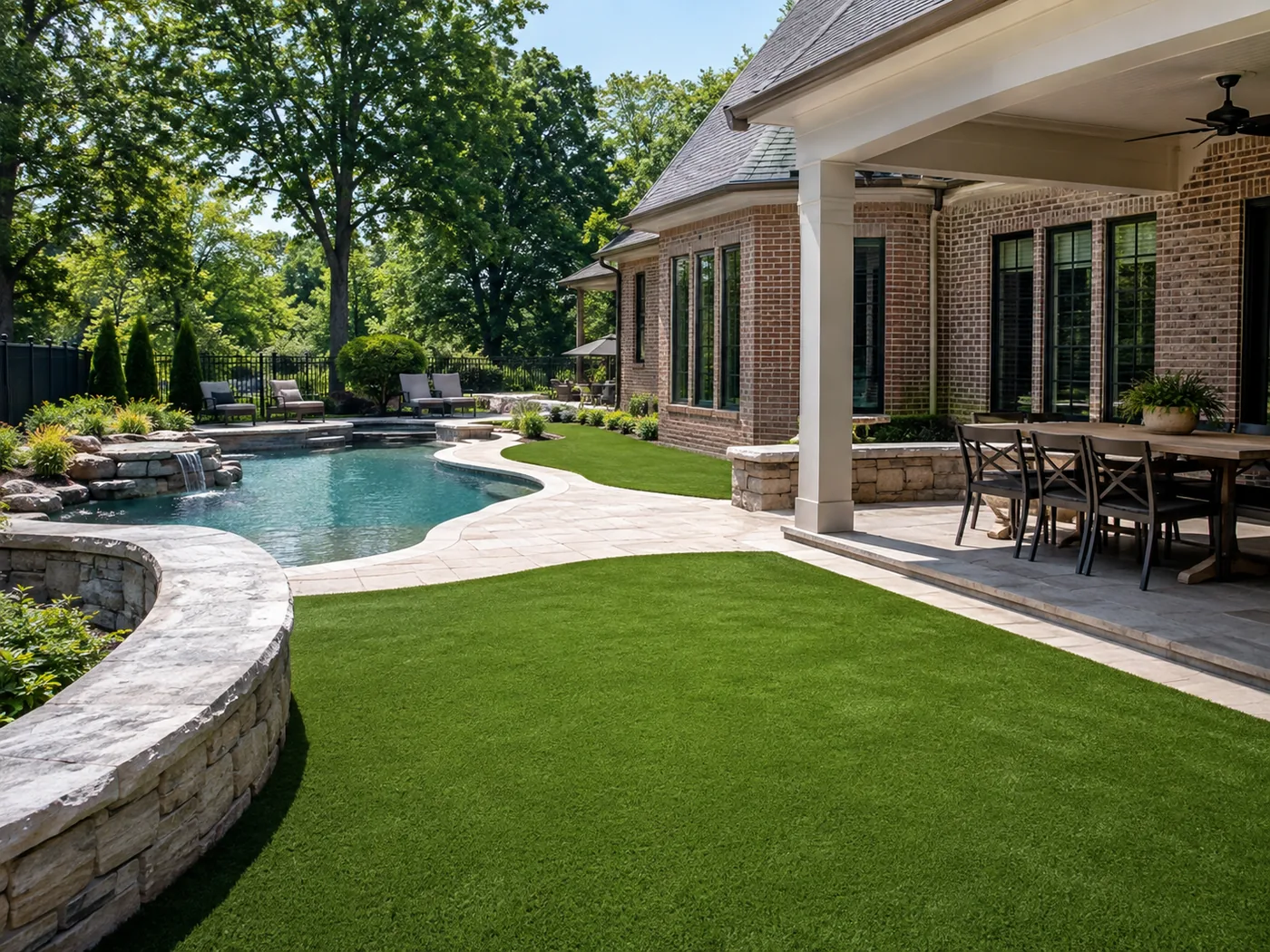
In practice, on a hot sunny afternoon turf sits well above air temperature, in the same range as composite decking or dark pavers. It is generally cooler than dark concrete or asphalt and warmer than a healthy irrigated lawn.
Kentucky is not Arizona. Peak surface temperatures here are meaningfully lower than in the desert Southwest, where most of the alarming figures online originate. Our summers are humid rather than brutally sunny, and cloud cover is common.
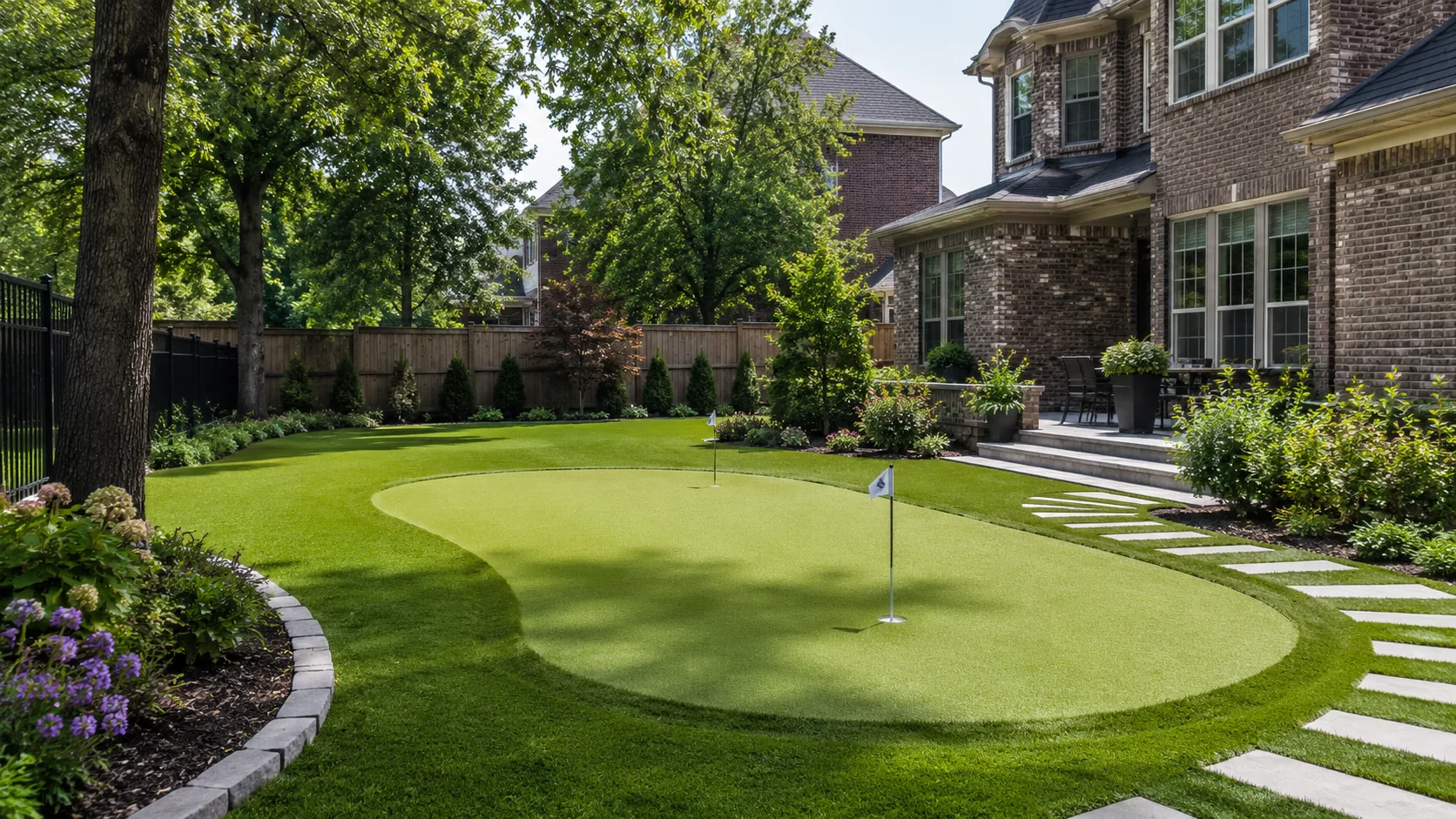
More importantly, shade changes everything. Turf under a tree, on the north side of a house, or beneath a covered patio stays close to comfortable regardless of the day. A large share of Lexington yards are at least partly shaded.
Several manufacturers make turf with reflective pigments or heat-dissipating fibre structures. It measurably reduces surface temperature and costs modestly more. Worth it for full-sun pool surrounds, pet areas and play areas.
Water drops turf temperature dramatically within seconds. It warms back up over the following half hour, but for a specific afternoon of use it is completely effective and costs nothing.
Dark crumb rubber holds substantially more heat than light-coloured sand or zeolite. We do not use crumb rubber residentially, partly for this reason.
A tree, a sail, a pergola. Any shade at all effectively removes the issue.
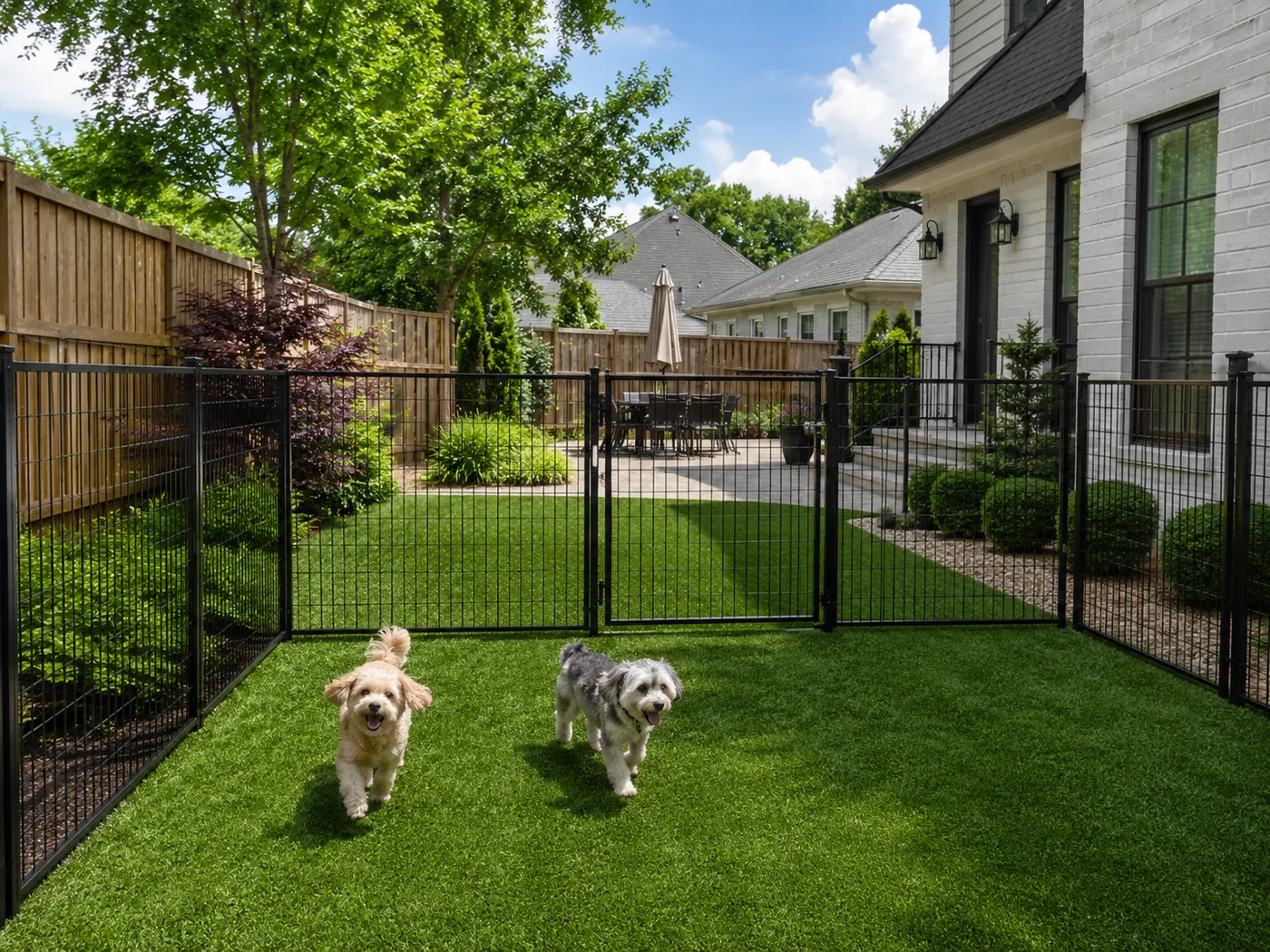
The practical concern is paws and bare feet on a hot afternoon. Reasonable approach: rinse before heavy midday use in July and August, specify cooling turf for full-sun pet and play areas, and remember that dogs self-regulate — they move to shade when the ground is uncomfortable, exactly as they do on a hot driveway.
For the other nine months of the year this simply is not a factor.
Most estimates are scheduled within 48 hours.
Tell us the space and we’ll give you a firm, written price. No pressure, no obligation.